
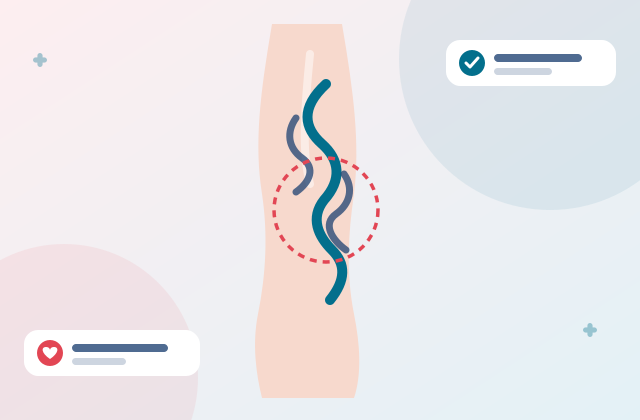
Symptoms and signs
- Visible twisted or bulging veins in the legs
- Aching, heaviness or tiredness in the legs, worse by evening
- Swelling around the ankles
- Itching or skin darkening near the ankle
- Cramps at night
See a doctor urgently if
- Sudden swelling, pain and redness in one leg may be a blood clot and needs emergency care
- A varicose vein that bleeds should have firm pressure applied and urgent medical care
- Open sores near the ankle need medical review
If you have a medical emergency, call 112 or go to the nearest hospital. Do not wait for an enquiry reply.
Causes and risk factors
- Weak or damaged vein valves
- Family history
- Standing for long hours
- Pregnancy
- Obesity and ageing
How a doctor assesses it
A doctor examines your legs standing and asks about symptoms and family history. A duplex ultrasound shows which veins have faulty valves and how blood flows, and this decides which treatment, if any, is appropriate.
Who may need it
Treatment is considered when veins cause symptoms, skin changes or ulcers, or when the person wants cosmetic improvement. The surgeon decides after examination and ultrasound.
Treatment options
Lifestyle and compression
Walking, raising the legs and compression stockings can ease symptoms. They do not remove the veins.
Endovenous laser or radiofrequency ablation
A thin catheter heats the faulty vein from inside to close it, done under local anaesthesia.
Sclerotherapy
An injection closes smaller veins or spider veins.
Surgery
In selected cases, the vein is tied off or removed through small cuts. The surgeon chooses based on your scan.
What the procedure involves
Most procedures are done under local anaesthesia as day-care. The surgeon uses ultrasound to guide a catheter or injection, closes the faulty vein, and blood is rerouted through healthy veins.
A bandage or compression stocking is applied, and walking is encouraged afterwards.
Recovery
- Mild bruising, tightness or tenderness along the treated vein
- Compression stockings as advised
- Walk regularly and avoid long standing at first
- Avoid heavy exercise and long flights for a period if advised
- Follow-up scan or visit as your doctor advises
Everyone heals differently. Follow your own surgeon's instructions.
Risks
- Bruising and soreness
- Skin discoloration along the vein
- Inflammation of a vein
- Blood clots, which are uncommon but serious
- Numbness or nerve irritation
- Veins returning or new ones appearing
- Skin burns or infection, which are uncommon
Your surgeon will explain which risks matter most for you. No result can be guaranteed.
Cost and payment
The cost of varicose veins treatment depends on your case and cannot be fixed without a medical assessment. These are the main things that change it:
- The method used (laser, radiofrequency, injection or surgery)
- One leg or both legs
- Ultrasound scan
- The hospital or day-care centre and the room type
- The surgeon's and anaesthetist's fees
- Tests and scans before surgery
- Medicines, dressings and follow-up visits
- Whether you pay in cash, use EMI or claim insurance
Our team explains your options for cash, EMI and insurance, helps you compare packages and handles insurance paperwork. Try the EMI calculator to plan your payments. Insurance cover depends on your policy and insurer, and approval cannot be promised.
Questions to ask your surgeon
- Which of my veins are causing the problem?
- Which treatment do you recommend and why?
- Can the veins come back?
- How long should I wear compression stockings?
- Who will perform my procedure, and how often have they done it?
- What are the risks for me and how are complications handled?
- What is the full cost, in writing, and what does it include?
Check that any doctor is registered, for example on the National Medical Commission register or with the state medical council.
Our step-by-step support
From your first call to your follow-up visits, our team stays with you:
- Our team connects with you. We call you, listen to your concern and understand the exact problem.
- We find the right hospital and doctor. Based on your treatment, we help you shortlist a suitable doctor and hospital.
- Package, cash, EMI or insurance. We explain the package and help you choose between cash, EMI and insurance.
- Doctor consultation arranged. We book your consultation with the doctor and share what to bring.
- Surgery is planned. If surgery is advised, we help plan the date and the steps before it.
- Cab booked for you. We arrange a cab for your hospital visit.
- Papers checked before treatment. We check your documents and reports so nothing is missed on the day.
- Insurance filing handled. We help fill in and follow up your insurance paperwork.
- Care from admission to discharge. We stay in touch through admission, surgery and discharge.
- Free follow-ups and diet plans. After surgery, you get free follow-up consultations and diet plans.
Frequently asked questions
Are varicose veins dangerous?
Usually not, but they can cause symptoms and complications. Sudden swelling and pain in one leg needs urgent care.
Do compression stockings cure varicose veins?
They ease symptoms but do not remove the veins.
Will the veins come back?
New veins can form over time. Your doctor can explain your chance.
Is laser treatment done with anaesthesia?
Usually local anaesthesia is used. Your doctor will explain.
Can you help with insurance and EMI?
Yes. Our team explains cash, EMI and insurance options and helps with the paperwork. Insurance cover depends on your policy and insurer, and approval cannot be promised.
How do I book a free consultation?
Call or WhatsApp +91 96255 29133, or fill in the form on this page. Our team will contact you the way you choose.
Related guides
Kidney stone treatment
Kidney stones are hard deposits that form from minerals in the urine.
Read the guideHernia surgery
A hernia happens when part of the intestine or fatty tissue pushes through a weak spot in the muscle wall of the...
Read the guidePlease note: This page is general information, not medical advice. Results vary and cannot be guaranteed. A qualified doctor must assess you before any treatment.